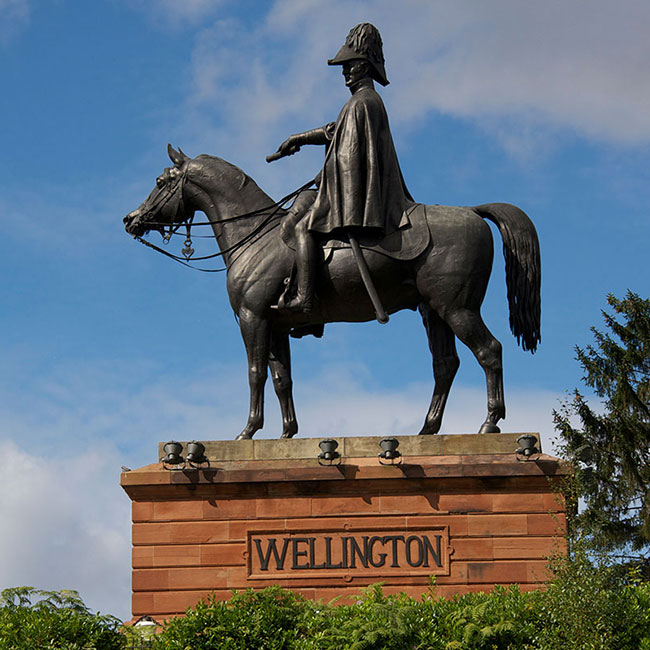

Things changed dramatically during the Crimean War. In 1854, Britain established its first purpose-built military base since Roman times at Aldershot, on both sides of the Basingstoke Canal — the North and South Camps. Before long, the once small town earned the title ‘home of the British Army’.
Between 1875 and 1879, the pioneering Cambridge Military Hospital was constructed, featuring pavilion-style wards connected by airy corridors — a forward-thinking design that promoted ventilation and reduced the spread of infection. During the First World War, it became the first base hospital to receive casualties from the Western Front and later made history as the first place in Britain to perform plastic surgery.
Today, under the stewardship of Wellesley, the site has been transformed into an exclusive collection of luxury homes and apartments — a thoughtful restoration that blends heritage architecture with the character of the wider Wellesley neighbourhood.
To find out more about the history behind where you live, type your street or building name into the search box below.
| Name | Background / Explanation |
|---|---|
| Acland Street | Named after Colonel Wroth Acland, who commanded the 2nd Brigade at the Battle of Maida. His leadership contributed to the success of the engagement. |
| Albuhera Road | Site of former barracks, named after the Battle of Albuhera (16 May 1811), another hard-fought Peninsular War battle where Allied troops defeated the French. |
| Alexander House | Named after Patrick Alexander, astronomer and benefactor who donated the Observatory, on Queens Avenue, to the Army. |
| Alten House | Major-General Charles Alten, commander of the King’s German Legion Brigade at Albuhera, a distinguished German unit fighting under British command. |
| Ann & Elizabeth Houses | Named after Ann Hunt and Elizabeth Hamel, twin sisters born in Aldershot in 1936 and reunited after 78 years apart — a Guinness World Record for the longest-separated twins. Their story highlights local human history and resilience. |
| Arnhem House | Site of Arnhem Barracks, opened 1965, named after the Battle of Arnhem (1944) — a key Airborne Forces victory in WWII. |
| Atkins Lane | Alban Randell Crofton Atkins – Chief Instructor, ASC Training Establishment, Aldershot (1908–1910). Later Director of Supplies & Transport, War Office. |
| Baird Close | Lt. General Sir David Baird, divisional commander at the Battle of Corunna. |
| Barrosa Road | Site of old barracks, named after the Battle of Barrosa, fought on 5 March 1811 during the Peninsular War. A British victory under General Graham against the French near Cádiz, Spain. |
| Baskeyfield Close | Named after Lance Sergeant John Daniel Baskeyfield. Gun Commander, 2nd (Airborne) Battalion, South Staffordshire Regiment; Battle of Arnhem; posthumously awarded Victoria Cross 1944 for supreme gallantry. |
| Beresford Close | General Sir William Beresford, commander at Albuhera, led the Allied forces to victory. Locally linked to the Beresford Memorial on Farnborough Road and Beresford Square in Aldershot. |
| Betts House | Quartermaster Serjeant Ambrose Betts, Royal Army Medical Corps. Died 31 December 1919, aged 39. His widow Julia lived at 62 Grosvenor Road, Aldershot. Buried in Addolorata Cemetery, Malta. |
| Bowen House | Serjeant Walter Bowen, 1st Field Ambulance, Royal Army Medical Corps. Died 23 July 1917, aged 27. His widow Dora lived at 19 Station Road, Aldershot. Buried at Coxyde Military Cemetery. |
| Bradbury Apartments | Named after Captain Edward Kinder Bradbury VC, who led L Battery, Royal Horse Artillery, at the Battle of Néry and was posthumously awarded the Victoria Cross for gallantry. |
| Bruneval Drive | Site of old barracks, named after the Bruneval Raid (27–28 February 1942), a daring airborne operation to capture German radar technology on the French coast. |
| Bucknall House | Lieutenant-General Gerard Bucknall, commanded XXX Corps, 2nd Army in Normandy before being replaced by Lt. Gen. Horrocks in August 1944. |
| Bunbury Close | Herbert Napier Bunbury – Served in Gibraltar and Ireland; no Aldershot connection. |
| Burgoyne Road | Named after Field Marshal Sir John Fox Burgoyne (1782-1871). Lengthy career in Royal Engineers, Napoleonic Wars, Board of Public Works in Ireland (1831–1845), Inspector-General of Fortifications (1845–1862), retired 1868. Involved in building early Aldershot camp. Commander of Tower of London 1865. |
| Burke Place | Lt. Colonel Charles James Burke, awarded a Distinguised Service Order. He was a Boer War veteran and early aviator. Commanded No. 2 Squadron Royal Flying Corps. He was killed 9 April 1917 at the Battle of Arras. |
| Buston Avenue | Named after Colonel Philip Thomas Buston. Chief Engineer in Aldershot 1905–1909, served in Afghan War, Hazara Expedition, South African War; Mentioned in Despatches multiple times; awarded DSO; retired Brigadier 1912; CMG 1918. |
| Cambridge House | Originally built as the residence for the Commanding Officer of the Cambridge Military Hospital. The house has since been divided into two homes. |
| Carter Road | Sir Evan Eyare Carter – Instructor and later Chief Instructor, ASC Training Establishment, Aldershot (1905–1908). Director of Supplies, BEF and War Office. |
| Chapman House | Named after Colonel F E Chapman CB, CRE 1859–1860. |
| Chappell House | Corporal George James Chappell, No. 1 Company, Royal Army Medical Corps. Died 29 January 1921. His widow lived at 69 Gordon Road, Aldershot. Buried in Aldershot Military Cemetery. |
| Charteris Close | Lieutenant Euan Charteris, awarded the Military Cross for courage and leadership during the Bruneval Raid. |
| Colborne House | Lieutenant-Colonel John Colborne, led the 1st Brigade, 2nd Division at Albuhera. Later became Lord Seaton, a distinguished British general. |
| Cooke Place | Named after Colonel A C Cooke CB, CRE 1873–1879. |
| Cooper House | Private Arthur James Cooper, 107th Field Ambulance, Royal Army Medical Corps. Born in Aldershot, died 22 October 1917, aged 22. His parents, James and Emily, lived at 1 Havelock Villas, Coleman Road, Aldershot. Commemorated on St Michael’s Church War Memorial. |
| Corunna Avenue | On site of Corunna Barracks (1891–1962), named after the Battle of Corunna (1809). |
| Cox, House | Cox, Thomas Omar Vincent (Tommy) – Died 2 Sept 1917, aged 20. Enlisted at 16, served with brother. Buried at Boulogne Eastern Cemetery. Lived at 71 Crimea Road, Aldershot. Remembered on St Michael’s Church and East End School memorials. |
| Crocker House | Lieutenant-General John Crocker, commanded I Corps, 2nd Army, during the Normandy landings, leading British forces inland after D-Day. |
| Dalton Road | Named after Acting Assistant Commissary James Langley Dalton, awarded the Victoria Cross for bravery at the Battle of Rorke’s Drift, South Africa, 22 January 1879. |
| Darbyshire Road | Named after Gunner Herbert Darbyshire, awarded the Médaille Militaire for bravery during the Battle of Néry (1 Sept 1914), helping man the last operational gun under heavy fire. |
| Dempsey Road | Lieutenant-General Sir Miles Dempsey, commander of the British 2nd Army in Normandy, who played a key role in the success of D-Day and beyond. |
| Dilkes House | Brigadier-General William T. Dilkes, led the 1st Brigade at the Battle of Barrosa, playing a key role in defeating the French advance. |
| Dorrell Apartments | Named after Battery Sergeant Major George Thomas Dorrell VC, who received the Victoria Cross for keeping the gun in action at Néry, helping turn the tide of the battle. |
| Duncan House | Major Alexander Duncan, commander of artillery at Barrosa, whose guns were vital to the British success in the battle. |
| Elphinstone Road | Named after Colonel Howard Crawfurd Elphinstone. Commanding Royal Engineer Aldershot 1881–1888; Crimean War VC recipient at Sebastopol 1855; later promoted Major-General, KCB, CMG. |
| Ensor House | Sergeant Bernard W. Ensor, awarded a Military Medal for his command at Passchendaele. He lived at 75 York Road, Aldershot. |
| Europa Close | Named after Europa Point, Gibraltar. Part of Gibraltar Barracks; associated with Europa Lodge. |
| Fire Station Road | The Stanhope Lines Fire Station, once located at the junction of Fire Station Road and Hospital Road. Fire was a constant danger in the early camp which was comprised mainly of wooden huts. The name commemorates the bravery of those who served in the Garrison Fire Brigade. |
| Ford Place | Reginald Ford Assistant Director of Supplies & Transport, Aldershot Army Corps (1903–1905). Later Director of Supplies & Transport, Levant Base, and GHQ France. |
| Fraser Road | Major-General Alexander Mackenzie Fraser, divisional commander at Corunna. |
| French Drive | General Sir John French, General Officer Commanding Aldershot (1902–1907) and first commander of the British Espeditionary Force in WWI. |
| Frost Drive | Major John Frost, commander of C Company, 2nd Parachute Regiment, led the Bruneval Raid and was awarded the Military Cross for his leadership and bravery. |
| Giffard Apartments | Named after Lieutenant J. Giffard, awarded the Légion d’Honneur for bravery during the Battle of Néry in 1914. |
| Gillies Lane | Commemorates Harold Gillies, the pioneering surgeon who established the first British military plastic surgery unit at the Cambridge Military Hospital in 1916. Working with dental surgeon William Kelsey-Fry, Gillies transformed facial reconstruction for WWI soldiers with severe injuries. |
| Goldie House | Named after Colonel M H G Goldie, CRE 1899–1901. |
| Graham Close | Lieutenant-General Thomas Graham, commander at Barrosa, whose leadership secured the victory. Also recalls Major-General Douglas Graham, commander of the 50th Northumbrian Division in Normandy during WWII. |
| Grieve House | Sergeant David Grieve, awarded the Military Medal for bravery during the Bruneval Raid, part of the team that secured vital enemy equipment. |
| Gun Hill House | Built in 1907 as accommodation for nursing sisters at the Cambridge Military Hospital. Later used as the officers’ mess for QARANC. Extended in 1938 and closed after the hospital’s closure in 1996. |
| Guthrie Way | Surgeon George James Guthrie, worked alongside McGrigor in Wellington’s army. Served as Deputy Inspector of Hospitals (1812), Principal Medical Officer in Lisbon (1814), and senior surgeon at Toulouse and Waterloo. Elected to the Royal Society in 1827 for his medical contributions. |
| Hadfield Place | Charles Arthur Hadfield – Served in South Africa and Ireland; no Aldershot connection. |
| Hamilton House | Major-General John Hamilton, commanded a Portuguese Division at Albuhera. There is also a Hamilton Place off Cargate Terrace in Aldershot. |
| Hardinge Close | Field Marshal Henry Hardinge, 1st Viscount Hardinge – Tasked with identifying a permanent large-scale training camp. Chose Aldershot for its strategic position and water supply, calling it “suited for a permanent camp of instruction in peace, and of concentration in war.” |
| Harvey House | Brigadier-General William Harvey, led a Portuguese Brigade of the 4th Division at Albuhera. His leadership helped secure key positions during the battle. |
| Hatt Street | Named after Regimental Sergeant Major Frederick William Hatt, an Aldershot resident who won the Military Cross and Bar in World War I. Serving with the Royal Dublin Fusiliers, he died on 30 July 1919. |
| Heard House | Heard, Herbert – Died 4 July 1918. Born in Putney, resident of Aldershot. Killed in action. |
| Heath Court | Sir Charles Ernest Heath – Brig-Gen i/c Admin Aldershot (1905–1907), later Director of Transport & Remounts and Director of Quartering, War Office. |
| Hoghton House | Major-General Daniel Hoghton, commanded the 2nd Brigade, 2nd Division at Albuhera and was mortally wounded during the battle. |
| Hollis Close | Company Sergeant Major Stanley Hollis, of the Green Howards, awarded the Victoria Cross on D-Day — the only VC awarded for that day’s actions. |
| Hope Grants Road | Named after General Sir James Hope Grant GCB, a distinguished British general who took command of the Aldershot Division in 1870. |
| Hospital Road | Named for its proximity to the Cambridge Military Hospital, one of Aldershot’s most significant military medical institutions. |
| Inglis House | Lieutenant-General Sir William Inglis, commander of the 3rd Brigade, 2nd Division, was severely wounded at Albuhera but famously shouted ‘Die hard, 57th, die hard!’ — giving the regiment its motto. |
| Inkerman Lane | Commemorates Captain Edward Inkerman Bell, Military Cross and Bar recipient. A local footballer before World War I, Bell served in the Middlesex Regiment and was killed on the Western Front on 24 March 1918. |
| Islander House | Named for the Red Devils parachute display team, based in Aldershot, who flew a red Britten-Norman Islander aircraft. |
| Jerome Street | Jerome Square was the location of the Married Quarters, situated not far from the current Jerome Street. The name is originally associated with Royal Engineers surveyor Thomas Stroud Jerome. |
| Josephson House | Commemorates Corporal Edmund George Josephson, Military Medal recipient in World War I. Born in Stanhope Lines, he served in the 2nd Battalion, Devonshire Regiment. His local roots, education at East End School and memorial at Holy Trinity Church tie his legacy closely to Aldershot. |
| Keller House | Major-General Rodney ‘Rod’ Keller, led the 3rd Canadian Infantry Division, I Corps, 2nd Army, landing on Juno Beach on D-Day. |
| Kelsey-Fry Road | Named after dental surgeon William Kelsey-Fry, who worked with Harold Gillies in pioneering reconstructive surgery at the Cambridge Military Hospital. His expertise in rebuilding soldiers’ shattered jaws helped establish the first British military plastic surgery unit. |
| Kemmis House | Lieutenant-Colonel James Kemmis, commanded the 2nd Brigade, 4th Division at Albuhera, contributing to the Allied defence under heavy fire. |
| Kempt Lane | Named after Colonel James Kempt, who commanded the Light Brigade at the Battle of Maida. Kempt went on to have a distinguished military career throughout the Napoleonic Wars. |
| Koe Drive | Frederick William Brooke Koe – Director of Supplies & Transport, Mediterranean and Egyptian Expeditionary Forces; no Aldershot connection. |
| Landon Drive | Sir Frederick William Bainbridge Landon – Assistant Director of Supplies & Transport, Aldershot (1908–1909). Later Director of Transport & Movements, War Office. |
| Leishman Views | Named after Lieutenant-General Sir William Leishman, creator of the typhoid vaccine that saved thousands during WWI. He later became Director-General of Army Medical Services (1923–1926). The Leishman Laboratory at the Cambridge Military Hospital was named in his honour. |
| Long Close | Sidney Seldon Long – Commandant, ASC Training Establishment, Aldershot (1908–1909). Later Director of Supplies, War Office. Resigned 1916 over government vehicle policy. |
| Lowry Walk | Named after Sir Galbraith Lowry Cole, commander of the 1st Brigade at the Battle of Maida, commemorating another leader from that decisive 1806 battle. |
| Macadam Way | Named after the former Macadam Square, which housed soldiers’ married quarters. |
| Mackworth Place | Named after Colonel Sir Arthur William Mackworth, Royal Engineers, Commanding Royal Engineer in Aldershot (1894–1899). He oversaw the construction of the Louise Margaret Hospital, where a ward was named after him. |
| Market Garden | Refers to Operation Market Garden (1944), of which the Battle of Arnhem was a major part. |
| Marsh Lane | Named after the old Marsh Road from the Victorian/Edwardian military camp. |
| Masterson Close | Sergeant Patrick Masterson, of the 87th Royal Irish Fusiliers, captured the French 8th Regiment’s eagle at Barrosa — the first French eagle taken in the Peninsular War. |
| McCarthy Crescent | Named after Dame Maud McCarthy, Matron-in-Chief of the British Armies in France during WWI, overseeing more than 6,000 nurses. Former Matron of the Cambridge Military Hospital and later Principal Matron at the War Office, she was made a Dame in 1918 for her exceptional service. |
| McGrigor Mews | Sir James McGrigor, Wellington’s Surgeon-General during the Peninsular War (1807–1814). Credited with major reforms that improved the care and conditions of wounded soldiers, laying the foundation for modern British military medicine. |
| Merchant House | Captain W. Merchant, Royal Army Medical Corps. Served in both the Boer War and World War One. From 1917 worked at Aldershot Military Isolation Hospital. Died 6 February 1920, aged 48, at Cambridge Military Hospital; buried in Aldershot Military Cemetery. Lived at 49 Victoria Road, Farnborough. |
| Molay Court | Named after Lieutenant William Francis Molay, Royal Army Service Corps (Remounts Section). Served in France and Russia during WWI; died 9 April 1921, aged 25. Awarded the Meritorious Service Medal and Mentioned in Despatches. Resident of Aldershot. |
| Montgomery Road | Commemorates Montgomery Lines, named after Field Marshal Bernard Montgomery, opened 7 April 1965 for the Airborne Forces. |
| Moore Drive | General Sir John Moore, commander at Corunna, killed at the moment of victory. |
| Morley Drive & Murphy Avenue | Farrier Michael Murphy and Private Samuel Morley, both of the 2nd Battalion, Military Train, received the Victoria Cross for rescuing a wounded officer during the pursuit of the Indian rebel army from Asimeghur, India, on 15 April 1858. |
| Mundy Place | Named after Lieutenant Lionel Frank Hastings Mundy, recommended for the Victoria Cross for his actions during the Battle of Néry in 1914. |
| Myers House | Lieutenant-Colonel Sir William Myers, commanded the 1st Brigade, 4th Division at Albuhera. Also recalls George Myers, builder of Aldershot’s first permanent barracks. |
| Nelson Apartments | Named after Sergeant David Nelson VC, awarded the Victoria Cross for courage at the Battle of Néry, continuing to fight despite severe injuries. |
| Newcome House | Major George Newcombe, DSO, son of Major and Sibylla Newcome of Aldershot Manor. Died 11 March 1916 while serving in Kenya. |
| Normandy Drive | Site of old barracks, named after the Normandy Campaign (6 June – 31 July 1944), the Allied invasion of Nazi-occupied France during WWII. |
| Observatory Road | Named after Alexander Observatory. Observatory donated by Patrick Young Alexander 1906; opened 22 Dec 1906; Alexander: astronomy, aeronautics, Fellow Royal Astronomical Society 1921; died 1943. |
| Oswald Street | Named after Colonel John Oswald, commander of the 3rd Brigade at the Battle of Maida. He later served on the General Staff during the Peninsular War (1812–1814), furthering his notable service record. |
| Paget Close | Lt. General Lord William Henry Paget, cavalry commander at Corunna, later Earl of Uxbridge and Marquess of Anglesey. |
| Patricia Close | Named after Lady Patricia Ramsay (Princess Patricia of Connaught), daughter of the Duke of Connaught and Princess Louise Margaret. A ward in the Queen Mary Wing (opened 1926) of the Louise Margaret Hospital was named in her honour. |
| Pennefather’s Road | Named after General Sir John Pennefather, General Officer Commanding – Aldershot (1860–1865). One of several roads named after Aldershot’s commanding generals, arranged from south to north. |
| Pierce House | Named after Helen Pierce OBE, who dedicated over 50 years to soldiers’ welfare from her hut in the grounds of the Cambridge Military Hospital. Known for helping soldiers, nurses, and families, she was awarded the OBE for her tireless service. |
| Pitt House | Named after Colonel W Pitt, CRE 1901–1902. |
| Pullen House | Pullen, Edwin George – Died 18 Jan 1918, aged 53. Lived at 23 Crimea Road, Aldershot. Buried at Fulford Cemetery. |
| Ramsden Close | James Ramsden, Parliamentary Under-Secretary of State for War, unveiled the wall on Montgomery Avenue built from crushed bricks of the old Victorian barracks encased in 1960s concrete. |
| Rennie House | Major-General Thomas ‘Tom’ Rennie, commanded the 3rd Infantry Division, I Corps, 2nd Army, during the Normandy campaign. |
| Rhine Way | Site of Rhine Barracks, opened 1965, named after the Crossing of the Rhine (1945), a WWII Airborne battle honour. |
| Rice Court | Named after Colonel (temp Brig Gen) S R Rice, Chief Engineer 1911–1912. |
| Sainty Close | Sainty, Henry St. John (John) – Died 10 Mar 1916 of wounds. Boer War veteran. Lived at 37 York Road, Aldershot. Buried in Aldershot Military Cemetery. |
| Scarletts Road | Named after General Sir James Yorke Scarlett, who commanded the cavalry at Aldershot until 1857, and later served as General Officer Commanding in Aldershot (1865-1870). He’s particularly remembered for his role as the commander in the charge of the Heavy Brigade at the battle of Balaklava. |
| Simmons House | Named after Colonel J A Simmons CB, CRE 1860–1865. |
| Smith House | Captain S. Philip Smith, awarded a Distinguished Service Order in the Royal Flying Corps. He was killed 6 April 1918 by the Red Baron. His family lived at The Warren, Cargate, Aldershot. |
| St Michael’s House | Built around 1905 as the chaplain’s residence for the Church of St Michael and St Sebastian, originally shared by Anglican and Catholic congregations. The church was later deconsecrated and destroyed by fire in 1984. |
| St. Sebastians Way | Named after the former Church of St Michael and St Sebastian, once located in the south-east corner of this development. (St Michael’s Road already exists in Aldershot.) |
| Strachan House | Company Sergeant Major Gerald Strachan, awarded the French Croix de Guerre for distinguished service during the Bruneval Raid. |
| Stuart Lane | Named after Major General John Stuart, commander at the Battle of Maida in 1806. The British victory at Maida led to the naming of Maida Barracks in his honour. |
| Tanner Street | Sergeant Frederick J. Tanner, awarded the Distinguished Conduct Medal for bravery at Passchendaele. Served from 1914. His family lived at 141 Holly Road, Aldershot. |
| The Cambridge | The Cambridge Military Hospital, opened in 1879, replaced the earlier Army hospital at Union Buildings. Named after the Duke of Cambridge, it followed Florence Nightingale’s hospital design principles. The hospital gained fame for medical excellence and pioneering plastic surgery during both world wars. Closed in 1996, it has since been redeveloped by Weston Homes as part of the Wellesley development. |
| The Stables | Marks the site of the former coaching house and stables for the Commanding Officers of the Cambridge Military Hospital. |
| The Water Tower | Built in 1890 on the ridge of the garrison to supply water by gravity to the surrounding military area. It remains a landmark of the Aldershot Garrison landscape. |
| Toye Lane | Honours Brigadier Alfred Maurice Toye VC MC, born in Stanhope Lines, Aldershot (1897). A Victoria Cross and Military Cross recipient, Toye distinguished himself at Passchendaele (1917) and Eterpigny (1918). He later served as Chief Instructor at the Royal Egyptian Military College and held senior military educational posts through World War II. He died in 1955, aged 58. |
| Turner House | Named after Dame Margot Turner, who joined Queen Alexandra’s Imperial Military Nursing Service in 1937 (later QARANC). She endured captivity as a prisoner of the Japanese during WWII, later becoming Matron-in-Chief (1964–1968) and Colonel Commandant (1969–1974). Awarded the MBE, Royal Red Cross, and DBE, she is commemorated with a plaque in the QARANC chapel at All Saints Church, Aldershot. |
| Warrilow House | William Warrliow – Died 1 Mar 1915. Born in Reading, lived and enlisted in Aldershot. Buried at Laventie Military Cemetery. Remembered on St Michael’s memorial. |
| Way Grove | Captain Frank Way. He was awarded the Military Cross in WW1. He was killed 25 October 1918. Buried in Aldershot Military Cemetery. His widow Lucy lived on Church Lane. |
| White Cross Place | Named for the motto “Sub Cruce Candida” (“Under the White Cross”), from the badge of the Queen Alexandra’s Royal Army Nursing Corps. The phrase reflects the Corps’ heritage and its link to Queen Alexandra’s Danish roots. |
| Wilson House | Named after Surgeon Major William James Wilson MD, the first Commanding Officer of the Cambridge Military Hospital when it opened in 1879. Forms part of the original CO’s residence with Cambridge House. |
| Yallop House | Yallop, Edward C – Died 12 Nov 1918, aged 40, in Serbia. Widow Minnie lived at 6 The Warren, Aldershot. Buried at Chela Kula Military Cemetery. |
| Young Way | Lieutenant Peter Young, received the Military Cross for gallantry in the Bruneval Raid. Later became a noted military historian. |